What happens when a policy designed to improve a fishery’s economy makes fishers’ lives worse? Or when an environmental intervention protects stocks but creates new pressures elsewhere in the system?
These are not hypothetical questions. Fisheries sit at the intersection of economies, ecosystems, and people’s lives. Yet international development policy (and national policies) frequently treats these as separate problems: economic policy focuses on productivity and profitability; environmental policy on stocks and ecosystems; and social issues are often considered afterwards. Recent research I conducted with Dr. Evgenia Micha at Heriot-Watt University shows that if we want resilient fisheries, we need to understand the whole system—and design economic solutions around the livelihoods and wellbeing of the people within it.
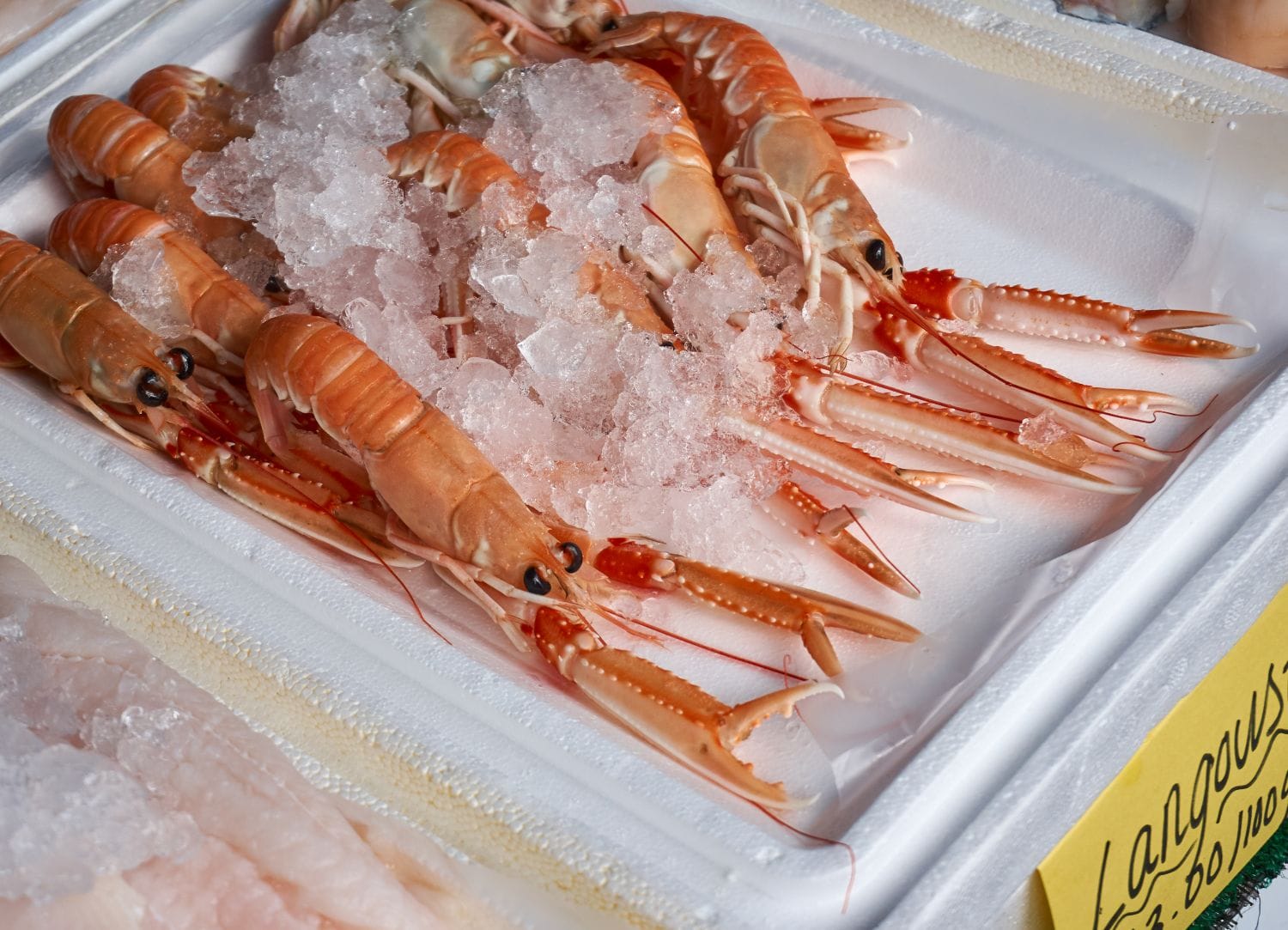
The Scottish fishing industry is often described through numbers: tonnes landed, value generated, jobs supported, or the condition of fish stocks. Nephrops—better known as langoustine, Norway lobster, or simply prawns—are Scotland’s most valuable shellfish species, with Scottish vessels landing around £83 million worth in 2025. The wider Scottish fishing fleet supports roughly 3,700 fishing jobs, alongside employment in processing, transport, and other parts of the seafood economy.
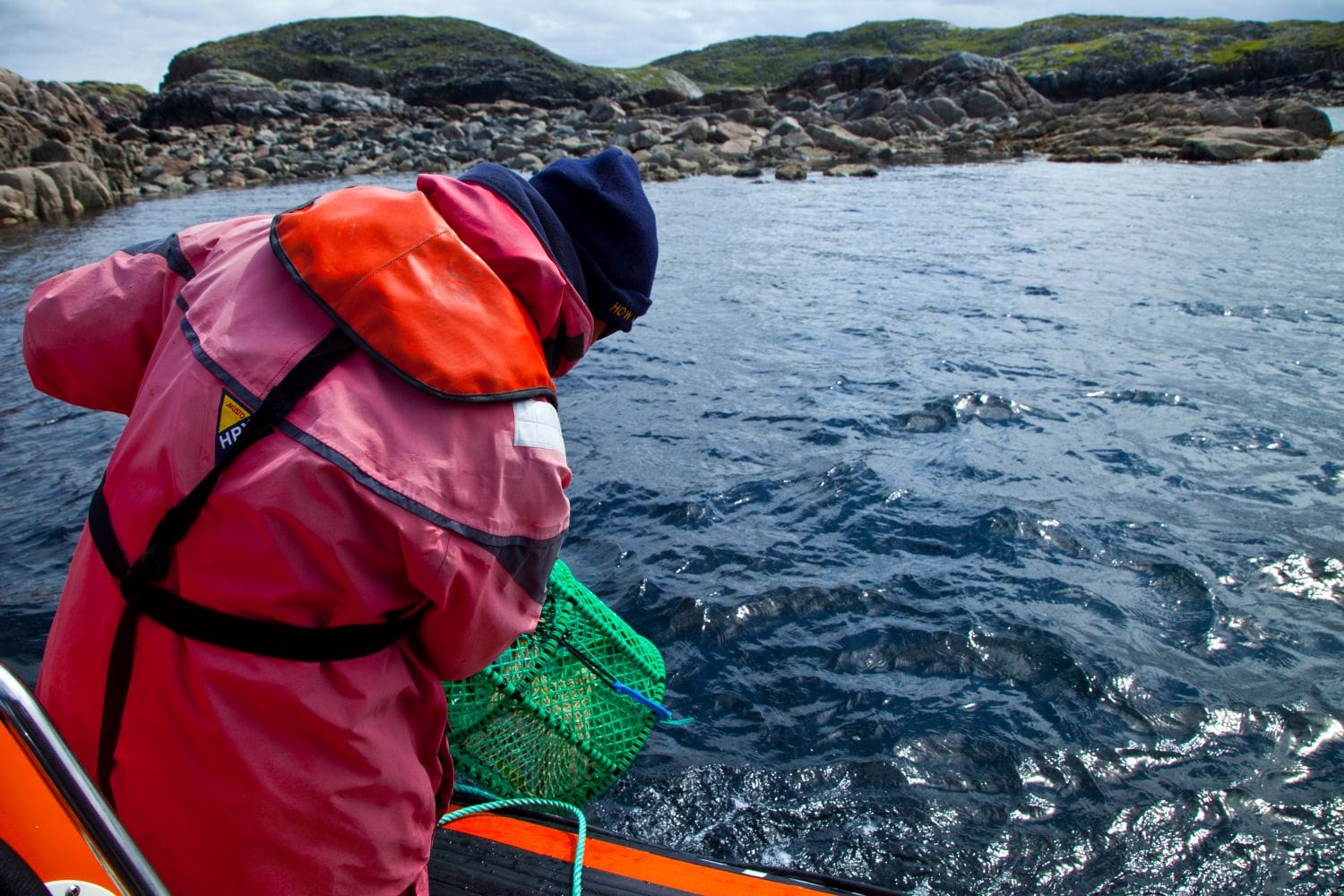
However, those national numbers tell only part of the story. Fishing employment is geographically concentrated, and its importance is much greater in some coastal and island economies. In 2024, for example, fishing accounted for approximately 14 percent of employment in Orkney and 3 percent in Shetland. And Nephrops supports quite distinct economic models: high-value creel (or basket)-caught langoustines may be sold live, while much of the trawled catch is processed and ultimately sold as scampi. In 2024, Scottish vessels landed some £17 million of creeled Nephrops and £64 million of trawled.
Decisions about the future of this fishery affect incomes, businesses, employment, communities, working lives, and people’s relationships with the sea. Fisheries are also about people: whether fishing provides a secure livelihood, whether people feel they have a voice in decisions about their industry, whether they can adapt to change, and whether fishing communities remain places where people can build fulfilling lives. Our recent research suggests that bringing these dimensions together is not simply desirable social policy; it may be fundamental to finding better economic and environmental solutions. And this can be applied in many different sectors in which DAI works.
Tides of Change, Across Dimensions
Climate change, environmental pressures, shifting markets, rising costs, and evolving fisheries regulation all affect what the future might look like for the Nephrops industry. The temptation when responding to such challenges is to separate them into different policy boxes. The problem is that fishers do not experience their lives in policy boxes. Our study, Integrated Pathways for Fishers’ Wellbeing: Evidence from Scenario-Based Systems Modelling, explored what happens when we instead think about the fishery as an interconnected social, economic, and environmental system.
Working with people in and around the Scottish Nephrops fishery, we used a research method called fuzzy cognitive mapping to understand what influences fishers’ wellbeing and how those different factors interact. This participatory method invites stakeholders to map the key components of a system and the direction and strength of the causal relationships between them, allowing the system’s structure and interactions to be assessed quantitatively.
This interplay matters in international development, and in our individual settings, because wellbeing is much more than income. Economic security is clearly important, but so too are environmental conditions, governance, relationships, health, autonomy, and having some control over the decisions affecting your livelihood. And crucially, these factors influence one another. Environmental decline can undermine economic security. Economic insecurity can make it harder for people to invest in new technology or change fishing practices. A lack of trust in governance can make otherwise sensible interventions harder to implement. Conversely, improvements in one part of the system can create positive effects elsewhere.
We used a systems model to explore different possible futures. One scenario concentrated predominantly on economic interventions—including financial access and productivity—another on environmental interventions and stronger regulation. A third took a holistic approach, combining interventions across economic, environmental, social, and governance dimensions. The comparison was revealing. Economic and environmental interventions could generate significant positive effects, but those benefits tended to be concentrated in particular parts of the system and could also produce unintended consequences elsewhere. The holistic scenario generated more balanced improvements across the system and avoided some of the deeper negative effects associated with working in only one domain.
That finding challenges a familiar way of thinking about fisheries transitions. Too often, people’s livelihoods appear late in the process. We identify the environmental outcome we want, decide which regulation or technical intervention might achieve it, and then ask how we can compensate people for the economic consequences. But livelihoods need not be treated as an obstacle to environmental change, or simply as something that needs to be protected from it. They can be integral to designing the solution.
For example, fishers’ ability to change practices may depend on whether they can afford new gear, access finance, find a market that rewards a different product, develop new skills, or absorb a temporary loss of income. Their willingness to participate may depend on whether they trust the institutions proposing the change, believe the process is fair, and feel that their knowledge has influenced the decisions being made. The viability of an intervention may depend on what happens elsewhere in the value chain—from processors and buyers to infrastructure and markets.
That understanding changes the role economic development can play. Instead of asking how to compensate people once environmental decisions have been made, we can ask how finance, markets, enterprise development, skills, institutions, and incentives can help create the transition in the first place.
Beyond the North Sea
This way of thinking is increasingly important well beyond Scotland. Across many of the coastal economies where DAI works, fisheries and aquaculture simultaneously provide food, employment, export earnings, and a foundation for local economies, while depending on ecosystems facing growing environmental and climate pressures. The context may be very different from the Scottish Nephrops fishery, but the underlying challenge is remarkably familiar: how can people maintain and improve their livelihoods while the natural systems supporting those livelihoods are themselves protected and restored?
A systems perspective also encourages us to question apparently inevitable trade-offs. Fisheries debates are frequently framed as choices between jobs and nature, economic growth and conservation, or fishing communities and environmental regulation. Sometimes, genuine trade-offs exist. But starting with those binaries risks closing down the search for solutions that can produce benefits across several parts of the system.
For example, environmental measures might be accompanied by access to finance that enables fishers to adapt; sustainable fishing practices could be connected to markets willing to reward them; management reforms could be developed alongside stronger fisher participation; and investment in productivity could simultaneously improve safety, working conditions, or environmental performance. In development contexts, conservation finance, enterprise support, and value-chain development can similarly be designed around improving both ecological conditions and the economic opportunities available to coastal communities.
There will not be one combination that works everywhere. Indeed, that is one of the most important lessons from taking a systems approach. Solutions need to begin with an understanding of the particular ecological, economic, and social system in which people actually live and work, and the people within that system should be involved in identifying where change is possible.
Ultimately, the success of a fishery cannot be captured only in terms of the tonnes landed, profits generated, or stocks protected. We also need to ask whether the people who depend on it can live well, adapt to change, and see a viable future for themselves and their communities within a healthy marine environment. That means moving beyond seeking optimal returns for the economy, environment, and people separately. The more interesting challenge is working out how livelihoods can be integrated into economic approaches so that improving people’s lives becomes part of the solution.