Antimicrobial resistance (AMR) is one of the most urgent global health threats. As bacteria, viruses, fungi, and parasites evolve to resist medicines designed to treat them, once-treatable infections are becoming increasingly difficult—sometimes impossible—to cure. Without decisive action, AMR could reverse decades of medical progress and place millions of lives at risk.
To address this challenge, the Fleming Fund, established in 2015 by the U.K. Government, supports countries across Africa and Asia to strengthen AMR surveillance systems and generate reliable data to guide national and global responses.
Since 2019, the Fleming Fund Country Grant Pakistan (FFCGP) has significantly strengthened the country’s response to AMR—from laboratory upgrades and international accreditations to pioneering research, genomic surveillance, stewardship programs, and nationwide awareness campaigns. As the project comes to a close, we take stock of what has been achieved by DAI with partners including the Liverpool School of Tropical Medicine, Health Security Partners, and Shifa International Hospital.
Strengthening Policy and Governance
FFCGP operates across human health, animal health, poultry, aquaculture, and environmental sectors, reflecting the interconnected nature of antimicrobial resistance. Overuse of antibiotics in the poultry sector, for instance, can exacerbate AMR in the human health arena. This One Health framework ensures coordinated surveillance, evidence-based policy making, and collaborative action across sectors.
Strengthening governance structures to support a sustainable, national, cross-sectoral response to AMR has been a key pillar of FFCGP’s work. For example, the project supported the development and costing of Pakistan’s National Action Plan on AMR. It also helped establish One Health AMR Secretariats at the national level and in the provinces of Khyber Pakhtunkhwa, Sindh, and Gilgit-Baltistan, while supporting the Government of Punjab in establishing an AMR Secretariat in Lahore. These secretariats serve as coordination hubs, convening technical working groups and steering committees that translate surveillance data into policy and practice.
Beyond institutional strengthening, FFCGP also supported several important initiatives:
- Conducted a study on the economic burden of AMR in Pakistan to generate evidence on the financial impact of resistant infections.
- Developed Pakistan’s One Health Gender Strategy on AMR.
- Strengthened policy dialogue to integrate surveillance data into national health planning.
Transforming AMR Surveillance Systems
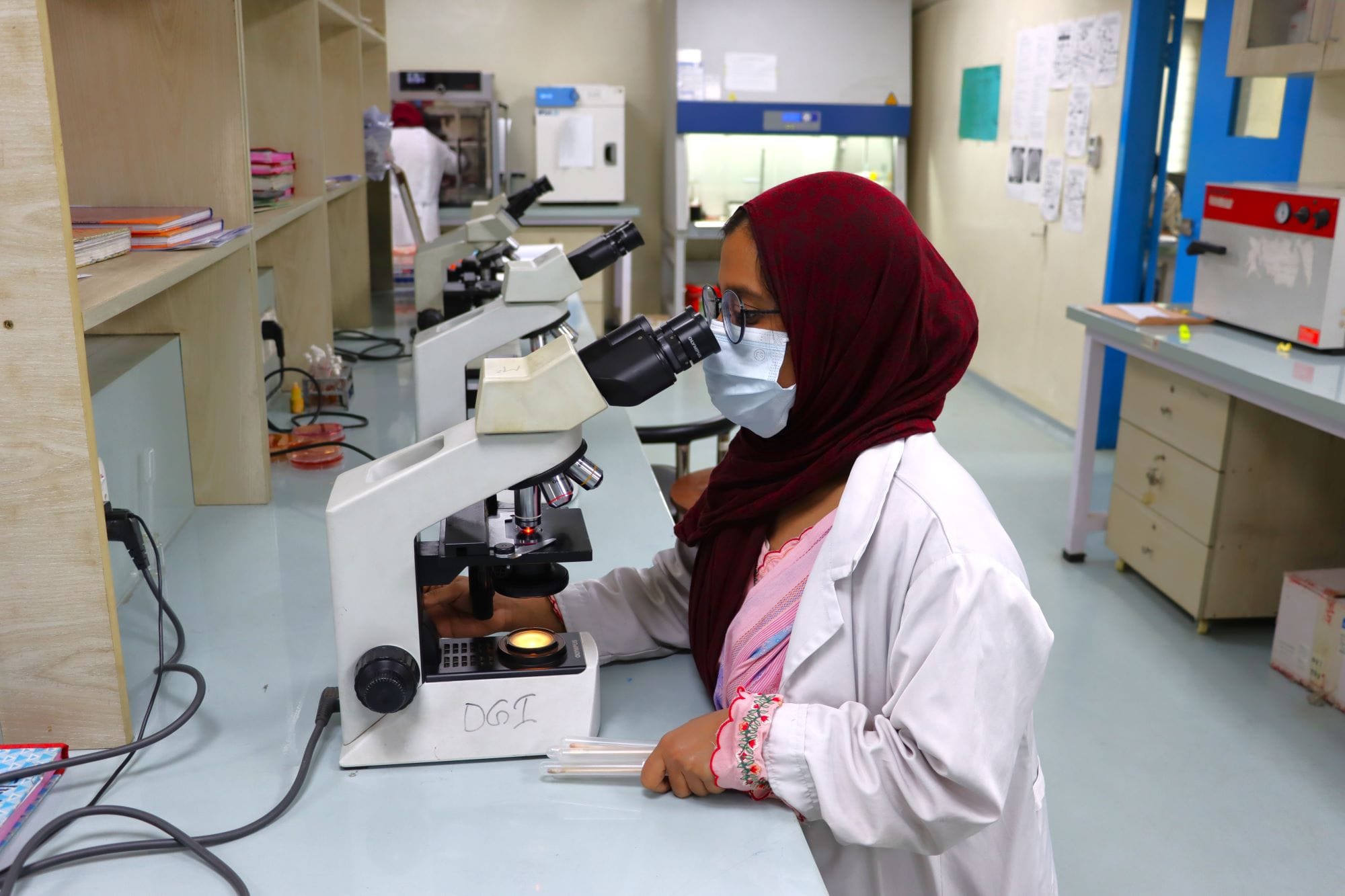
Reliable surveillance is essential to understanding where resistance is emerging, how it may be spreading, and where action is most needed. FFCGP supported 25 AMR sentinel surveillance sites across human health, animal health, and aquaculture sectors through lab upgrades, equipment provision, and supply of essential consumables.
In the environmental sector, FFCGP helped develop Pakistan’s AMR Surveillance Strategy for the Environment and is supporting a groundbreaking pilot study on AMR in wastewater—an important step in understanding environmental transmission pathways.
To strengthen reporting and global alignment, the project also trained staff from 37 sentinel sites across Pakistan on Global Antimicrobial Resistance Surveillance System (GLASS) reporting, in collaboration with the National Institute of Health (NIH).
Building Lab Capacity
Since a surveillance system only works when the results it produces can be trusted, laboratory quality and accreditation are part of the backbone of an effective AMR response. FFCGP supported capacity building at key National Reference Laboratories including the NIH, National Veterinary Laboratory, National Reference Laboratory for Poultry Diseases, and the Pakistan Council for Research in Water Resources—all of which play a critical role in national surveillance, diagnostics, and quality assurance.
Improving lab quality has been a major focus of the project, which has been instrumental in the following milestones:
- ISO 15189 accreditation, NIH
- ISO 17025 accreditation, National Veterinary Laboratory
- Supporting NIH toward ISO 17043 accreditation
- Two human health sentinel sites achieving ISO 15189
- Eight additional sentinel laboratories progressing toward ISO accreditation
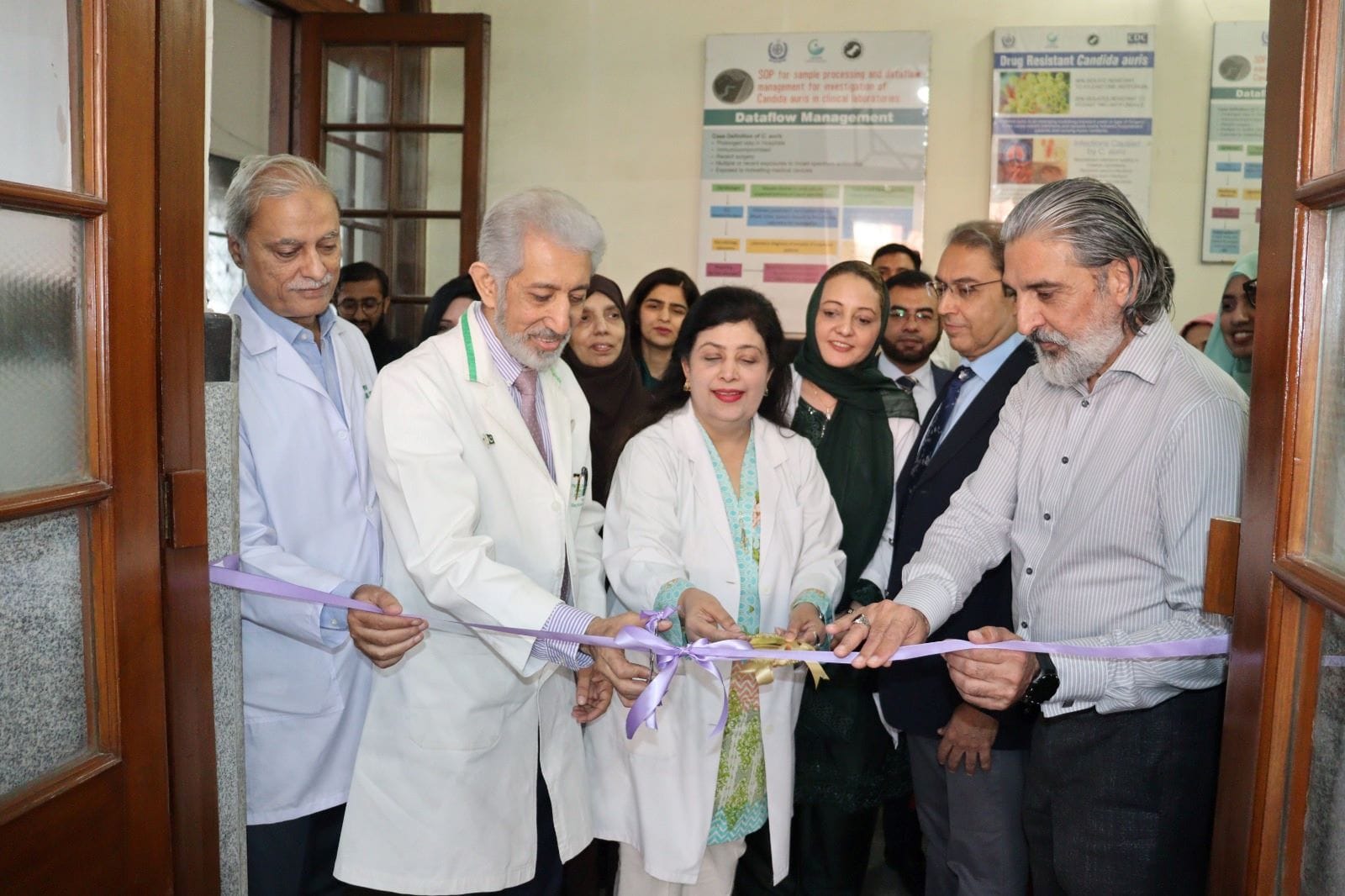
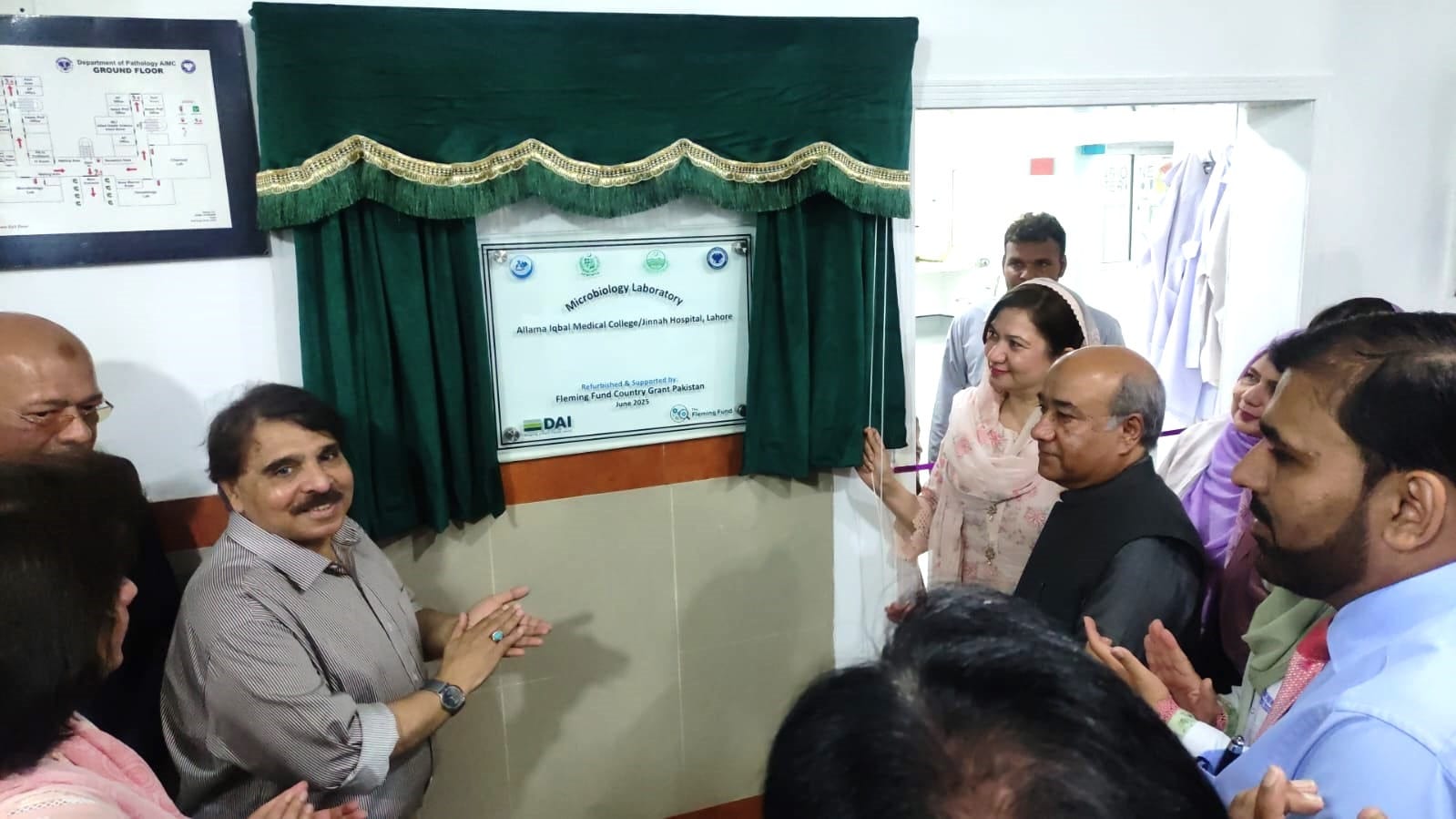
In addition, FFCGP has significantly improved lab infrastructure across the country: upgrading 13 microbiology laboratories to Biosafety Level 2; reviving the microbiology lab at Provincial Headquarters Hospital in Gilgit-Baltistan, which had been non-functional for seven years; and developing Pakistan’s first Biorepository Inventory Management System to better manage AMR samples.
These are practical investments, but their implications are much wider. Stronger laboratories support more reliable diagnosis, better surveillance, and greater confidence in the data that policy makers and practitioners rely on.
Advanced Diagnostics, Genomic Surveillance, Real-Time Data
In any health system, visibility matters. Problems that can be seen more clearly can be managed more effectively.
To improve diagnostic accuracy and surveillance capacity, FFCGP supported the introduction of advanced diagnostic technologies across laboratories. These upgrades include advanced blood culture systems (BD BACTEC) installed in four human health laboratories and BD Phoenix and MALDI-TOF systems provided to animal health national reference labs; support for implementing the National External Quality Assurance System; and Whole Genome Sequencing (WGS) capacity strengthening at NIH, with services extended to animal health labs. NIH can now perform WGS testing and advanced data analysis, enabling deeper understanding of resistance patterns and transmission pathways.
FFCGP also led hands-on national training on the development of antibiograms—decision-support tools that synthesize data on local AMR susceptibility—and on AMR data flow, thereby strengthening lab data analysis and reporting capacities.
To improve access to surveillance data, FFCGP helped set up One Health AMR dashboards in Sindh, Khyber Pakhtunkhwa, and Gilgit-Baltistan provinces, and work is underway to develop a national AMR dashboard at NIH. These digital platforms will enable policy makers, researchers, and health professionals to access real-time AMR data for informed decision making.
From Surveillance to Stewardship, Research to Policy
Effective AMR surveillance is an important part of a sustainable national program, but surveillance alone is not enough—equally essential is effective stewardship to reduce the misuse of antimicrobials. FFCGP collaborated with the Drug Regulatory Authority of Pakistan to develop a comprehensive IT-based Antimicrobial track and trace system covering human and animal health sectors, which will monitor antimicrobial production, distribution, and use across the country.
In 2022, the project’s clinical engagement efforts—working with hospitals and medical professionals to reduce excessive antibiotic use—received the Global AMR Stewardship Prize. With Shifa International Hospital, FFCGP also helped set up a Centre of Excellence for Antimicrobial Stewardship and has developed standardized antibiogram protocols while facilitating antimicrobial consumption training.
Generating local evidence is critical to shaping effective AMR policies. In addition to the aforementioned study on the economic burden of AMR, FFCGP is supporting research estimating the burden of disease attributable to AMR—focusing on hospital-acquired infections—and a study on antimicrobial use among pregnant women. These studies will provide data to guide clinical practice, public health interventions, and regulatory reforms.
Raising Awareness, Growing Impact
Advocacy and public engagement were central to FFCGP’s objectives. Through increasingly active participation in events such as the annual World AMR Awareness Week, the project elevated AMR as a national health priority and strengthened cross-sector collaboration—an achievement formally recognized by the Pakistan Economic Survey 2024–25, which reflects the project’s expanding role in Pakistan’s health security.
We are proud that FFCGP has helped build a more resilient and sustainable AMR system that protects lives today and safeguards the health of future generations.