As humanitarian and development organizations continue to focus on investing in systems that can sustain progress over time, the practical question is how these approaches work on the ground. Market systems development is one established model, bringing development partners together with businesses, governments, and communities to reduce barriers to investment and strengthen local markets.
In DAI’s experience, development partners play an important role in this process by helping businesses understand unique contexts—such as refugee-hosting communities—and adapt their business models so that their investment becomes both commercially viable and socially valuable.
The Sustainable Market Inclusive Livelihood Pathways to Self-Reliance (SMILES) program offers one example of how this approach can work in practice. I spoke to Jacob Etunganan, Business Development and Innovations Associate at Ugandan bean and soybean company Okeba, about how its partnership with SMILES helped expand farmers’ access to high-quality agricultural inputs, technical advice, and reliable markets while enabling the company to establish a commercial presence in refugee-hosting communities.
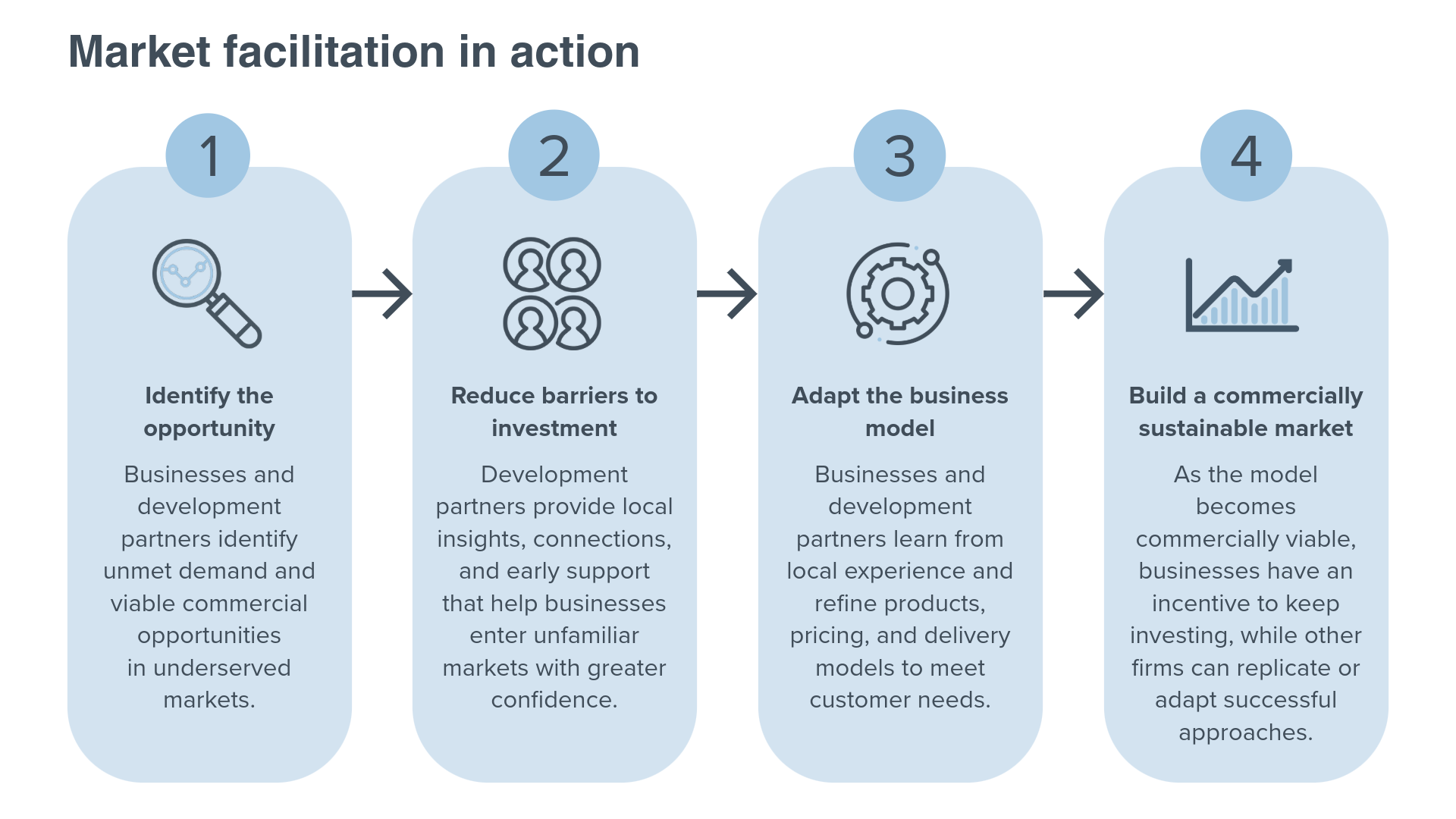
Okeba’s experience highlights four related elements of this approach: recognizing commercial opportunities, reducing barriers to market entry, supporting businesses as they adapt their models, and creating conditions for continued investment after project support ends.
See Markets Where Others See Constraints
In refugee-hosting communities, limited market information, unfamiliar operating environments, and perceived risk can make the commercial case for investment difficult to assess. This uncertainty can spur a self-reinforcing cycle in which underserved markets appear to have limited demand, thereby muting business interest.
For SMILES, this dynamic was evident in the market for improved seed. Smallholder farmers hesitated to invest in more expensive certified seed when their access was inconsistent, agronomic support was limited, and counterfeit products undermined confidence in quality. Low uptake, in turn, signaled weak demand to seed suppliers, reducing their incentive to stock high-quality products at affordable prices or invest in serving these communities. The result was a thin market in which the interplay of scant supply and weak demand left poorer, harder-to-reach areas overlooked—despite an underlying need for better products and services.
Development actors are well positioned to break this cycle. Through close engagement with local communities and institutions, they often develop a detailed understanding of where market constraints exist, which communities remain underserved, and where commercial interests could thrive. This insight helps businesses better assess opportunities they might otherwise overlook or dismiss as too risky.
For SMILES, research conducted at the start of the program demonstrated just how thin the market for improved seed was in Kyegegwa and Kikuube. SMILES approached Okeba with this evidence and invited the company to propose a commercially viable way to improve seed access, offering grant funding to co-invest alongside Okeba.
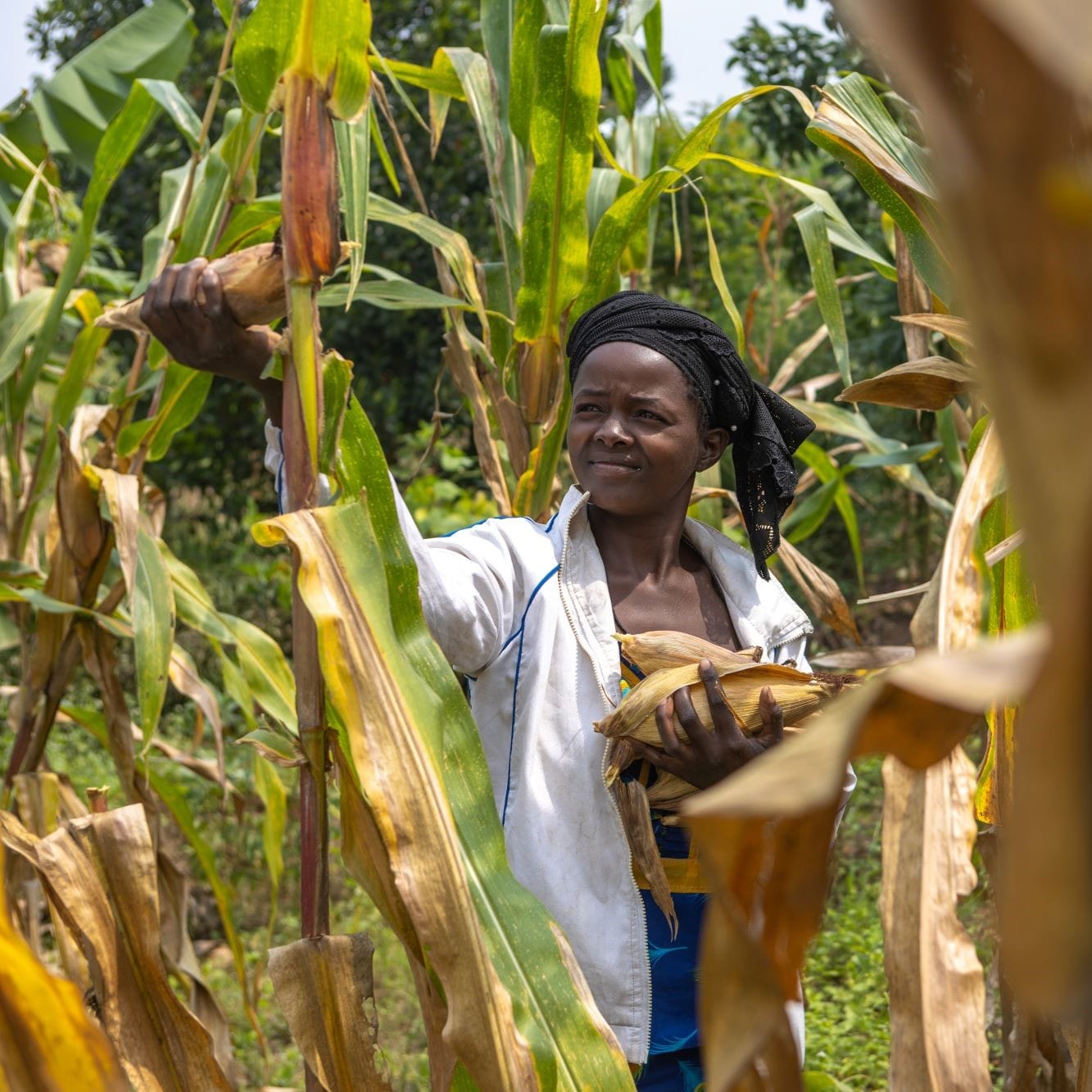
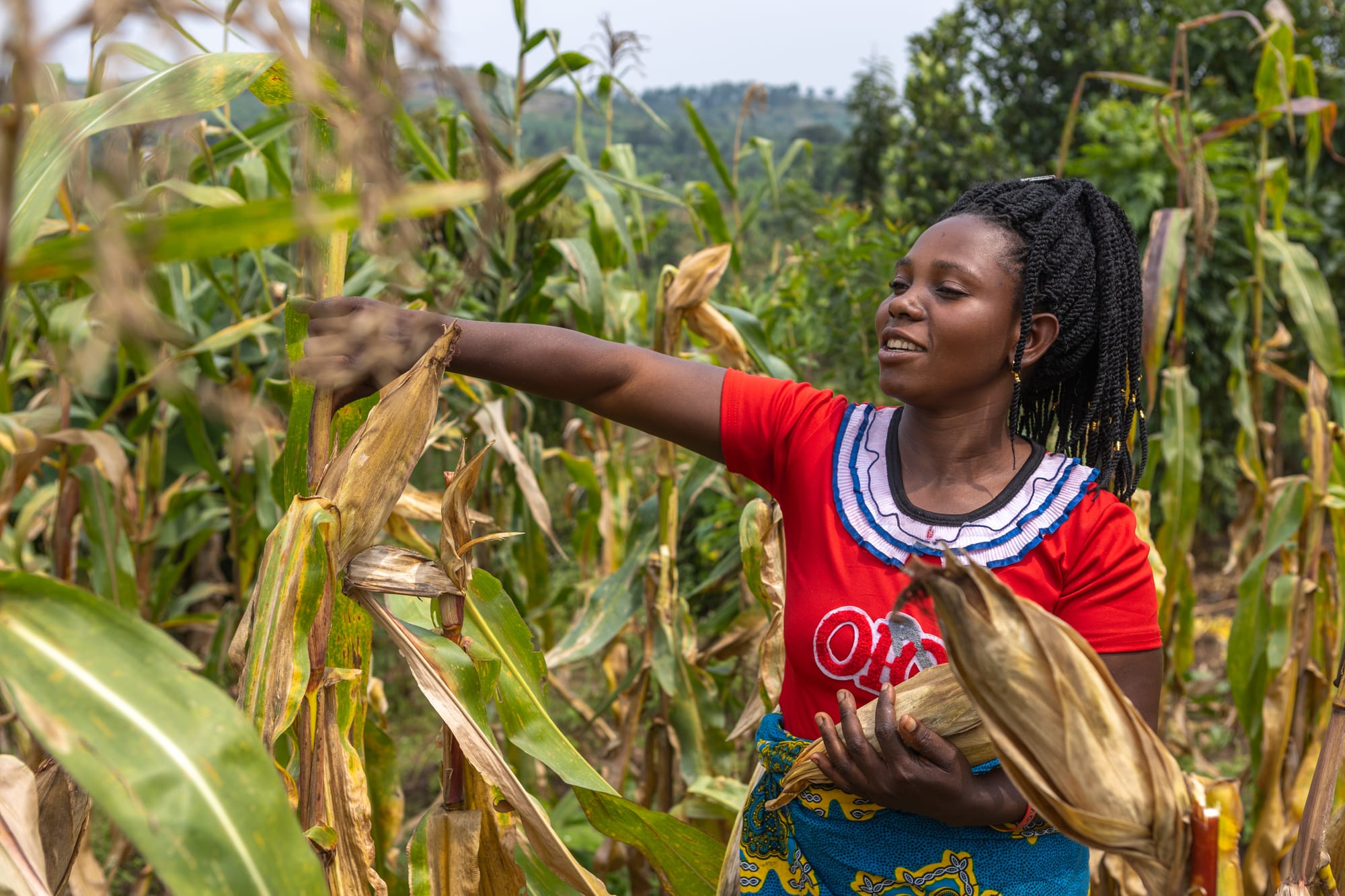
The opportunity quickly became apparent. Many smallholders wanted access to improved seed but had few reliable suppliers. “We realized there is actually a huge market for inputs within the settlements and host communities because most of the key agribusinesses had not gone there,” Etunganan explained. “Farmers were buying seed from informal markets, poor-quality seed with low viability and yields.”
Farmers were already purchasing agricultural inputs, but the formal market was not meeting their needs. SMILES’ market insights helped Okeba assess an opportunity that might otherwise have remained obscured by the constraints of operating in these communities.
Development programs can help businesses assess these opportunities by sharing local knowledge, relationships, and market insights. For Okeba, a clearer understanding of demand helped distinguish a viable market from one that appeared difficult to enter because of the surrounding constraints.
Reduce Obstacles to Investment
Recognizing an opportunity is only the first step. Businesses also need confidence that they can operate successfully in an unfamiliar market. Regulatory requirements, limited infrastructure, unfamiliar institutions, and uncertainty about customer needs can all increase the cost and risk of investment.
This is where market facilitation can make the greatest difference. Working with SMILES helped Okeba overcome one of the key barriers to market entry: understanding the regulatory environment and building the relationships needed to operate in highly regulated refugee-hosting contexts. Refugee settlements in Uganda are managed under a regulatory regime unfamiliar to most private companies.
“Entry into refugee settlements is not as easy as entering any other market because they are managed by the Office of the Prime Minister,” Etunganan said. “Your entry needs to be regulated. So that’s why you find that in most cases it was only our development partners who work within the refugee settlement.” SMILES introduced Okeba to key contacts in the Prime Minister’s office and helped bridge the gap between Okeba’s commercial experience and the distinct requirements of refugee settings.
Understanding customers is equally important. Years of humanitarian assistance have shaped expectations around how agricultural goods and services are accessed, while declining purchasing power made affordability a central consideration. According to Etunganan, smallholder farmers “are not very market-oriented, so entering such a market and saying, ‘I am selling a product, and you have to buy it,’ can be challenging. They already expect support to be free.”
SMILES helped connect potential supply with demand while giving businesses and households better information on which to base their investment decisions. The program connected Okeba with households and community leaders already interested in improved agricultural inputs, while its household coaching supported a more commercial approach to farming, including understanding improved inputs as a business expense that could generate returns at harvest.
SMILES also brought businesses and smallholder farmers together during enterprise planning. Households receive a cash grant to invest in productive activities, creating an opportunity for Okeba and other business partners to demonstrate how investing in improved inputs could increase agricultural productivity and profits.
Build Business Models That Can Adapt
Entering a new market does not guarantee commercial success. Businesses operating in fragile and underserved contexts often need to adjust their products, services, pricing, and delivery models as they learn more about local demand.
For Okeba, this meant understanding how purchasing power, previous experiences with humanitarian assistance, and varying levels of market participation would affect how potential customers engage with Okeba’s products. “You need to understand the context deeply. It takes time to shift mindsets. You have to be flexible and adaptive,” Etunganan reflected.
The company refined its approach as its understanding matured. Building demand for certified seed involved demonstrating its value over several growing seasons and establishing confidence that improved inputs could generate sufficiently improved returns for farmers.
Trusted relationships were an important part of this process. Continued engagement with farmers, local institutions, and community leaders gave Okeba a stronger basis for investment. As Etunganan noted, “If you want to succeed in these markets, you must work closely with other actors. Refugee communities value trust. They need to see that you’re not just coming for a short project and then leaving.”
SMILES created opportunities for Okeba to test ideas, respond to feedback, and adapt its commercial approach. This collaborative way of working also allowed development and commercial perspectives to inform one another. “The way SMILES worked with us was through co-creation. When we co-create and merge the two approaches, that’s how we achieve our goals,” Etunganan explained.
This kind of support allows businesses to retain ownership of their commercial decisions while drawing on relationships and evidence that help them respond to changing market conditions.
Success Means Businesses Continue Investing
A useful indication of successful market facilitation is whether businesses continue investing after development partner support ends. Continued investment can create win-win conditions for businesses and communities that expand markets, strengthen supply chains, and create additional opportunities for local communities.
Okeba’s experience illustrates how this process can unfold. As the company established stronger relationships with farmers and developed a clearer understanding of demand, its commercial confidence grew. “We saw an increase in certified seed sales. We started as a grain bulking company, but we’ve now grown into both a seed and grain company. Entering the refugee settlements gave us an emerging market and increased visibility,” Etunganan said.
That growing commercial confidence created opportunities beyond the original partnership. The company subsequently signed a memorandum of understanding with Uganda’s Office of the Prime Minister and secured financing through the Refugee Investment Facility at a lower interest rate than was available for commercial finance. This financing enabled Okeba to increase its working capital, expand grain aggregation, and strengthen its supply network across refugee settlements and surrounding host communities.
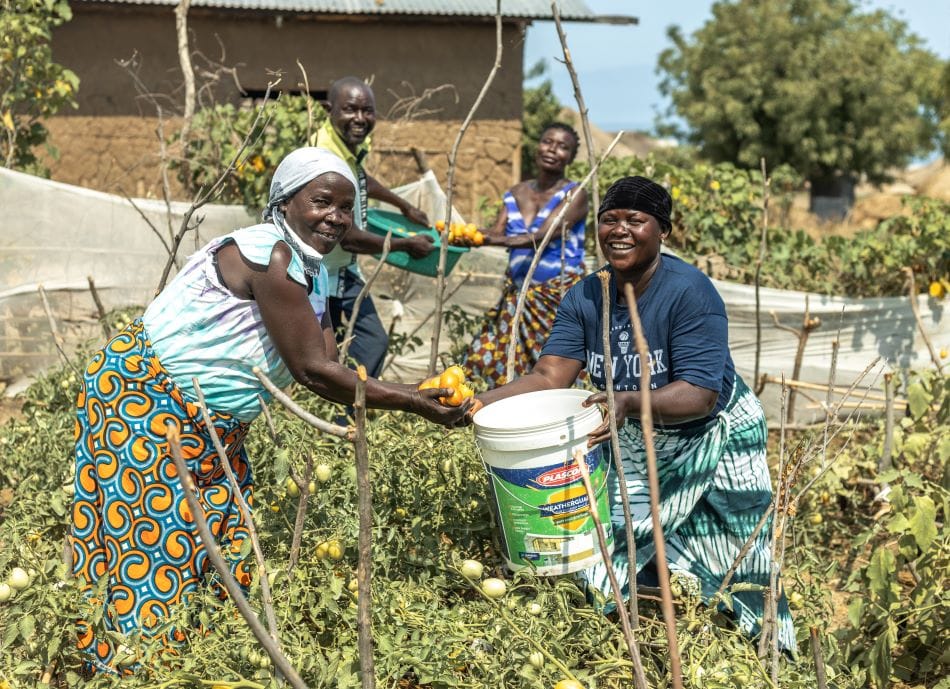
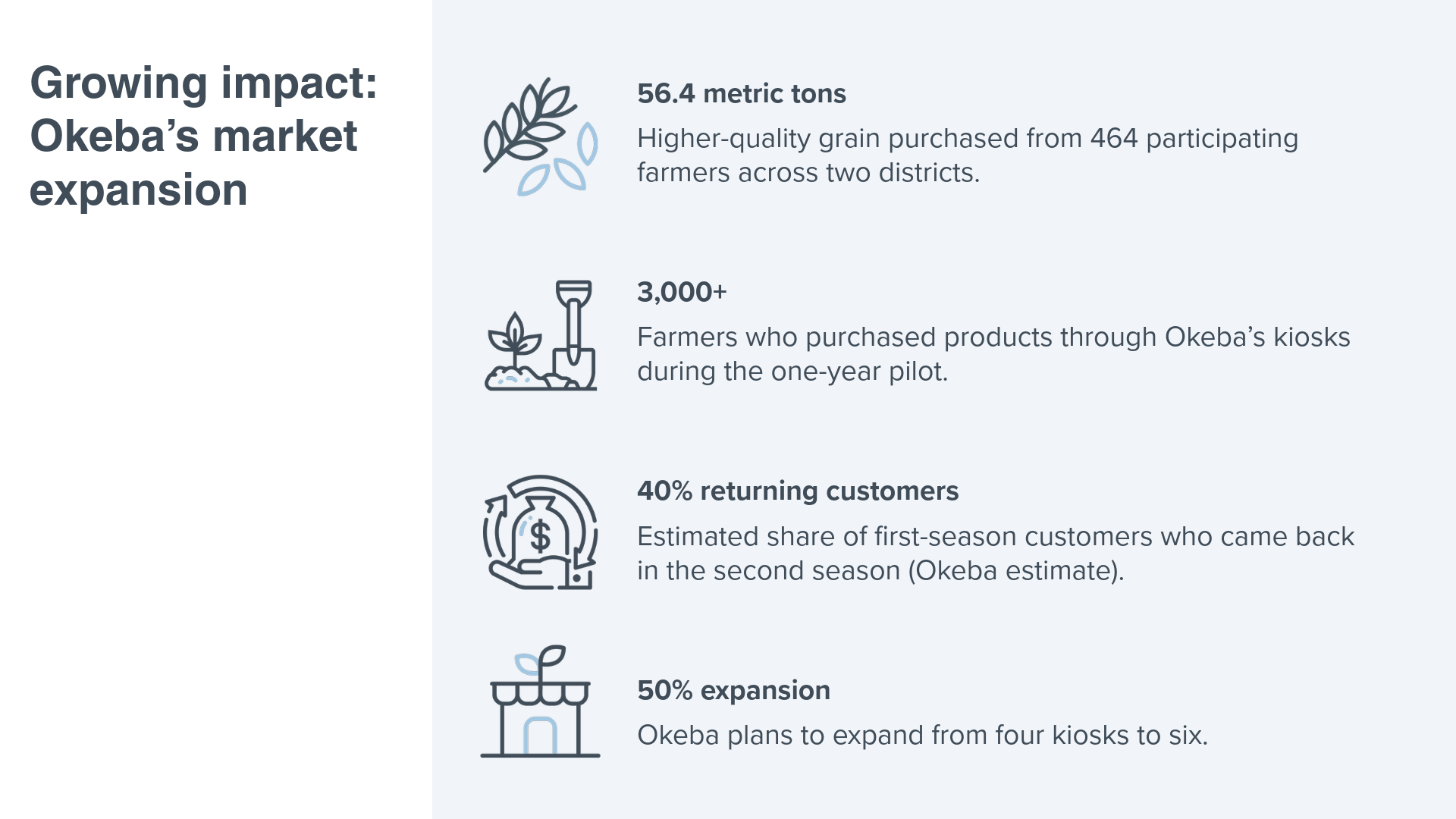
The commercial relationship also extends beyond the sale of inputs. Okeba purchased 56.4 metric tons of higher-quality grain from 464 participating farmers across the two implementation districts, providing those farmers with a market for the improved harvests that the partnership had helped make possible.
The company’s last-mile distribution kiosks provide a tangible indication of commercial viability. With co-funding from SMILES, Okeba set up kiosks as a low-cost investment to gauge demand and improve access to high-quality inputs and agronomic advice. During the one-year pilot, more than 3,000 farmers purchased products through these kiosks, and an estimated 40 percent of customers from the first season returned in the second—an encouraging sign.
“We were able to break even with the first four kiosks, and now we’re planning for two more because they increased our sales and connected us to more farmers,” Etunganan said.
As the barriers to investment diminish, commercial considerations increasingly guide Okeba’s decisions to expand. Etunganan emphasized the importance of investing in both productive assets and the mindset shifts that enable refugees to participate more fully in markets. The goal, he argued, should be to “help refugees become active market participants, not just recipients.”
As SMILES demonstrates, lasting impact comes when development actors, businesses, and financial institutions work together to address market constraints and create the conditions for continued investment. By facilitating private sector investment in underserved communities, development programs can help strengthen local markets that continue expanding access to goods, services, and economic opportunities over time.